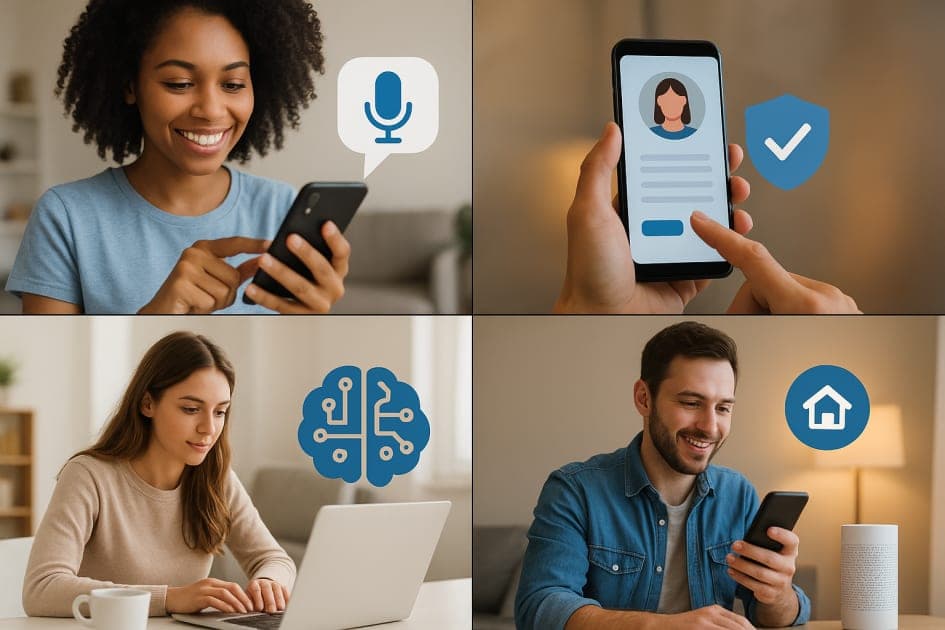
How AI is changing our daily lives
How AI Is Changing Our Daily Lives
Artificial Intelligence (AI) is no longer a futuristic idea — it is already a powerful force shaping the world around us. From the way we communicate to how we work, learn, shop, and even stay healthy, AI has become deeply woven into our daily lives. What was once limited to science fiction is now a reality that makes our routines faster, smarter, and more efficient.
AI in Communication and Social Media
Every time you open your smartphone, AI is quietly working behind the scenes. It powers voice assistants like Siri, Alexa, and Google Assistant that help you answer questions, play music, or set reminders. On social media, AI decides which posts, videos, and ads you see based on your interests. Platforms such as Instagram, TikTok, and YouTube use AI algorithms to understand user behavior and recommend personalized content, keeping you engaged for hours.
AI in Healthcare
AI is transforming the medical world in ways that save lives. Doctors now use AI-based tools to detect diseases like cancer at early stages, sometimes even before symptoms appear. Smart health watches and apps can monitor your heartbeat, sleep, and physical activity, sending alerts if something is unusual. These technologies allow people to take better control of their health and enable doctors to provide more accurate diagnoses and treatments.
AI in Education and Work
Learning has also evolved with AI. Online education platforms use AI to create personalized learning paths for students, helping them study according to their speed and understanding level. Tools like ChatGPT and Grammarly assist in writing, research, and language learning. In workplaces, AI automates repetitive tasks, allowing employees to focus on creativity and problem-solving. It also helps businesses analyze data, predict trends, and improve customer service.
AI in Transportation and Smart Homes
Self-driving cars and smart traffic systems are another example of how AI improves our lives. Although still developing, these technologies aim to make roads safer and reduce travel time. In our homes, AI is the brain behind smart devices such as lights, thermostats, and security cameras. You can control them with your voice or a simple app, saving energy and increasing convenience.
Challenges and the Future of AI
Despite its benefits, AI also brings challenges. Privacy issues, job automation, and data misuse are real concerns. However, with proper regulations and ethical use, AI can be one of humanity’s greatest tools. The key is to use it wisely — to support human intelligence, not replace it.
Conclusion
Artificial Intelligence is not just a tool of the future; it’s the present reality shaping every aspect of our lives. From healthcare and education to entertainment and home comfort, AI continues to make our world more connected, efficient, and intelligent. As we move forward, understanding and using AI responsibly will determine how positively it influences our future.