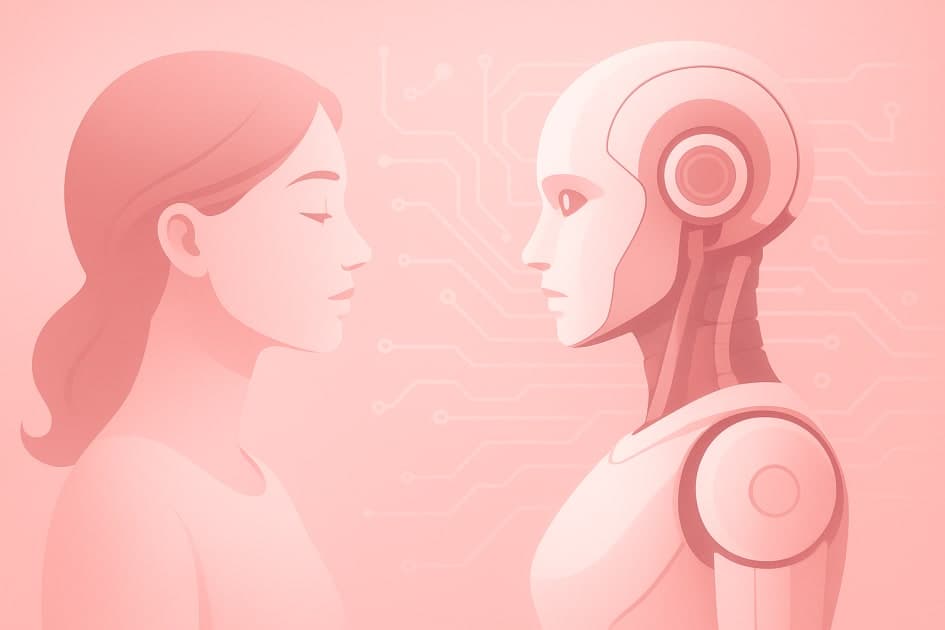
How Smart Can Machines Really Get?
On this page
Here’s a 500-word English article on your chosen topic:
🧠 How Smart Can Machines Really Get?
Artificial Intelligence (AI) is no longer a distant dream — it’s already part of our daily lives. From smartphones that recognize our faces to cars that drive themselves, machines are becoming increasingly “smart.” But this raises a fascinating question: How smart can machines really get? Can they ever match or even surpass human intelligence?
The short answer is — they’re getting closer every day, but there are still limits. AI systems today can process information faster, analyze massive amounts of data in seconds, and make decisions with remarkable precision. For example, medical AI can detect diseases from scans more accurately than human doctors in some cases. In business, AI algorithms predict customer behavior and manage entire financial portfolios. Machines have become specialists — experts in very narrow tasks — and in those areas, they often outperform humans.
However, the intelligence of machines is still different from human intelligence. AI learns from data, but it lacks true understanding, emotions, and consciousness. A machine can recognize a cat in a photo, but it doesn’t know what a cat is in the way a child does. It doesn’t feel curiosity, love, or empathy. Its “intelligence” is mechanical — based on patterns, probabilities, and instructions given by humans. This means AI can only be as smart as the data and goals it’s trained with.
Still, scientists are working toward a new level of intelligence known as Artificial General Intelligence (AGI) — a system that could think, reason, and learn across different domains just like a human being. If AGI becomes real, it could revolutionize the world in unimaginable ways. Machines could design new technologies, solve complex global problems, and even improve themselves without human help. That’s both exciting and frightening.
Some experts believe we could reach AGI within a few decades, while others argue that human-like thinking may be impossible to replicate. The biggest challenge is understanding what intelligence really is. Human thinking involves creativity, moral judgment, intuition, and social understanding — qualities that can’t easily be programmed into a machine.
There’s also the issue of control. If machines become smarter than humans, who decides what they do? Could an AI make choices that harm people or take actions beyond human understanding? These ethical questions are now at the center of global discussions about AI safety and regulation.
In the end, machines will continue to get smarter — faster, more capable, and more efficient than ever before. But intelligence isn’t just about speed or memory; it’s about understanding, emotion, and purpose. Until machines can truly think and feel, human intelligence will remain unique.