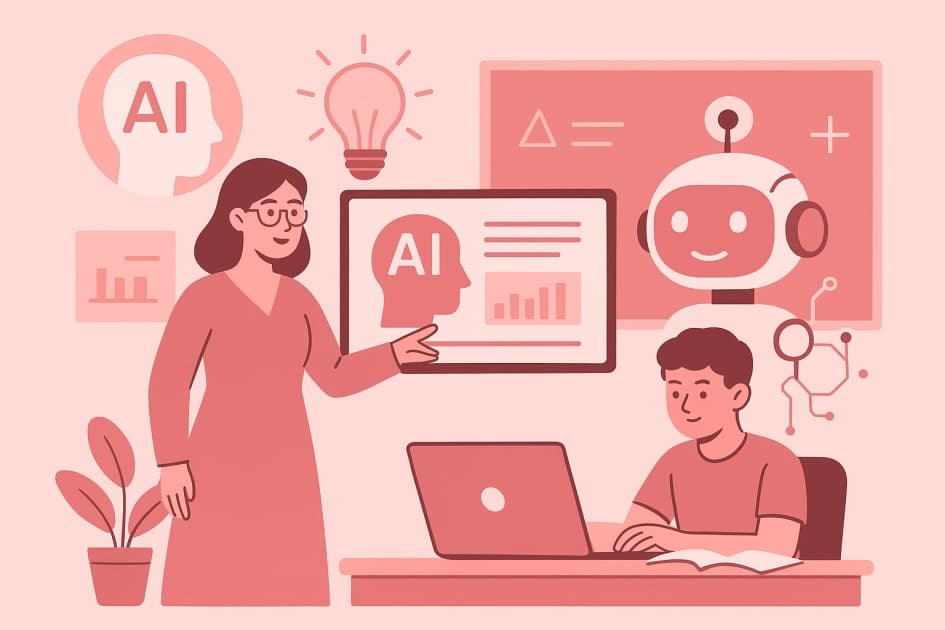
The Role of AI in Education
On this page
The Role of AI in Education
Artificial Intelligence (AI) is reshaping the world in many ways, and one of the most promising areas of transformation is education. From personalized learning tools to automated grading systems, AI is revolutionizing how students learn, teachers teach, and institutions operate. The role of AI in education goes far beyond technology—it’s about creating smarter, more inclusive, and efficient learning environments for everyone.
One of the greatest contributions of AI in education is personalized learning. Traditional classrooms often struggle to meet the needs of every student, as each learner has a unique pace and style. AI-driven platforms analyze student performance, identify strengths and weaknesses, and adapt lessons accordingly. For example, AI tools like intelligent tutoring systems can provide real-time feedback and customized exercises that help students improve in specific areas. This kind of personalization ensures that no student is left behind.
AI also plays a vital role in automating administrative tasks. Teachers spend a significant amount of time grading assignments, preparing reports, and managing schedules. AI systems can handle many of these repetitive tasks, allowing educators to focus more on teaching and mentoring students. For instance, AI-powered grading software can evaluate multiple-choice and even essay questions with high accuracy, saving hours of manual effort.
Another significant benefit is the enhancement of accessibility in education. AI technologies such as speech recognition, translation tools, and text-to-speech applications are breaking down barriers for students with disabilities or language differences. Visually impaired students can use AI voice assistants to access textbooks, while non-native speakers can instantly translate lessons into their own languages. This inclusivity is making education more global and fair.
In addition, AI helps educators and policymakers make data-driven decisions. By analyzing vast amounts of educational data, AI can predict learning outcomes, identify struggling students early, and recommend interventions. This data-driven approach improves both teaching quality and institutional performance.
However, the integration of AI in education also brings challenges. Concerns about data privacy, over-reliance on technology, and the potential loss of human interaction must be carefully addressed. Education is not just about learning facts—it’s about empathy, creativity, and social connection. Therefore, AI should be viewed as a supportive tool, not a replacement for teachers.
In conclusion, AI has the power to transform education into a more personalized, accessible, and efficient experience. When used responsibly, it can empower both teachers and students to reach their full potential. The future classroom may not replace human educators, but it will certainly be powered by intelligent technologies that make learning smarter and more human-centere.